By Katy Gorsuch
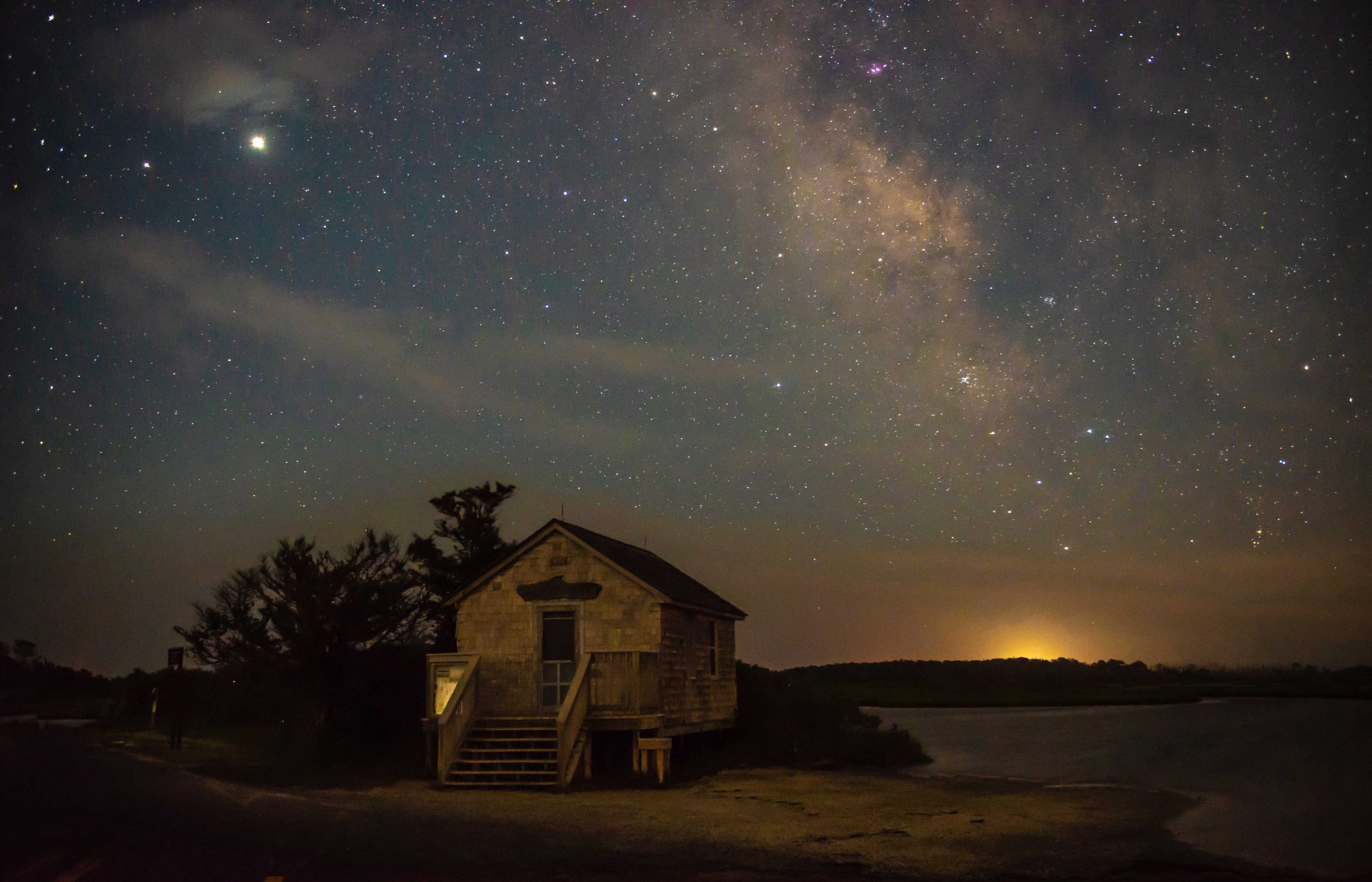
Assateague at Night by Rick Dove, DNR Photo Contest 2020. The next full moon after this photo was taken would have been the full Buck Moon, on July 5th in 2020.
Continuing our exploration of the diverse and wonderful ecology of Maryland, we turn to the warm summer full moons and all they represent!
As with winter and spring moons, summer full moons have folk names often in alignment with animals responding to the changing seasons, or locally important events. Recorded in English as far back as 1722, indigenous peoples named the full moons, although some are more recently derived.
Full moon names varied widely depending on geographic location and language family amongst Native Americans. For example, in some locations one full moon might be named “Goose Moon,” while in another location the same time period could be the “Cold Moon.” The practice of naming moons this way doesn’t seem to have been historically universal, and in the centuries since moon names were first recorded by colonists, misinformation has proliferated. For our purposes, we use supposed Algonquian full moon names as a starting point to explore Maryland’s unique wildlife, and how the seasons change!
Summer Moons:
July____________________________________________________________
Buck Moon
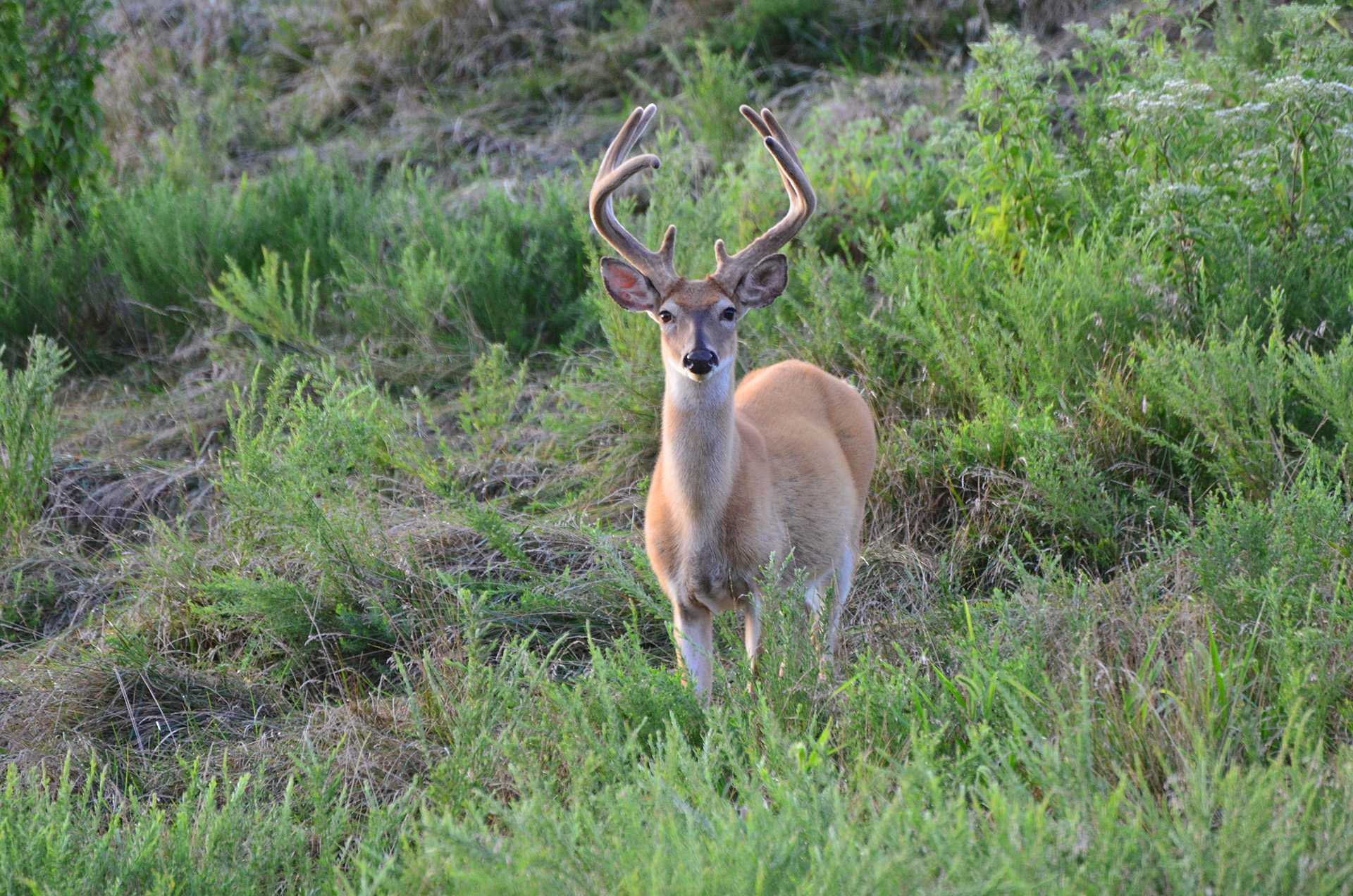
Photo by Matthew Doged, submitted to the 2016 Maryland DNR Photo Contest. The buck in this photo, taken in late August, shows what may be close to the full extent of his seasonal growth, but still retains the velvet indicative of growing antlers.
This moon is often called the Buck Moon, which is attributed to the time of year wherein antler growth of deer is at its height. Unlike many moon names, we have evidence that this name is likely to have been used locally; the name “the Moon of Stags” appears in a 1722 printed text called “A history of Virginia, in four parts.”
When European colonists first arrived in what is now known as Maryland, there were two native species of deer (family Cervidae) that lived in the area. Today, we are familiar with white-tailed deer (Odocoileus virginianus) as the sole native species in the state, but at the time elk (Cervus canadensis) were also common. Sika deer (Cervus nippon), a Japanese elk species, would be introduced on the lower Eastern Shore in 1916 by Clement Henry.
Elk were extirpated (locally made extinct) in Maryland by 1874, and in neighboring Pennsylvania in 1877, but the ghosts of the species remain in the names of many Maryland towns (e.g., Elkton, Elkridge, Elk Neck, etc). Although the subspecies of American elk that lived on the East Coast was driven to extinction, the species as whole survived thanks to Western populations.
The names of many members of Cervidae get confused frequently; in North American English, “elk” is used to refer to Cervus canadensis (also called “wapiti” based on Cree and Shawnee linguistic tradition, which fall into the Algonquian language family). The word in British English was originally used to refer to moose (Alces alces). While the name “moose” comes from Algonquian, the word “elk” likely originates from proto-Germanic languages (dating back to as early as 500 BC). The rune alzig (also called elhaz) is from the Elder Futhark runic alphabet, translates as “elk,” and appears as a vertical line with three tines reaching upward. This is consistent with the appearance of the European moose, who have more branching antlers than North American moose.
Elk and white-tailed deer both shed their antlers every year, regrowing them starting in the spring. Unlike caribou (aka reindeer), only male elk and white-tailed deer generally grow antlers (females with certain hormonal differences sometimes grow small antlers). Antler growth is a nutrient-intensive process, requiring significant calories, and the antlers are protected during this period by a soft layer called the “velvet.”
The antler in this stage is “precalcified,” beginning as cartilage before bone tissue develops, so is softer than it will be later in the process. The velvet layer is important; during the growth period, the bone itself is full of blood vessels, needed to supply the growing sections with minerals and blood cells that grow the bone. Injuries that occur to antlers while in velvet may cause them to develop abnormalities.
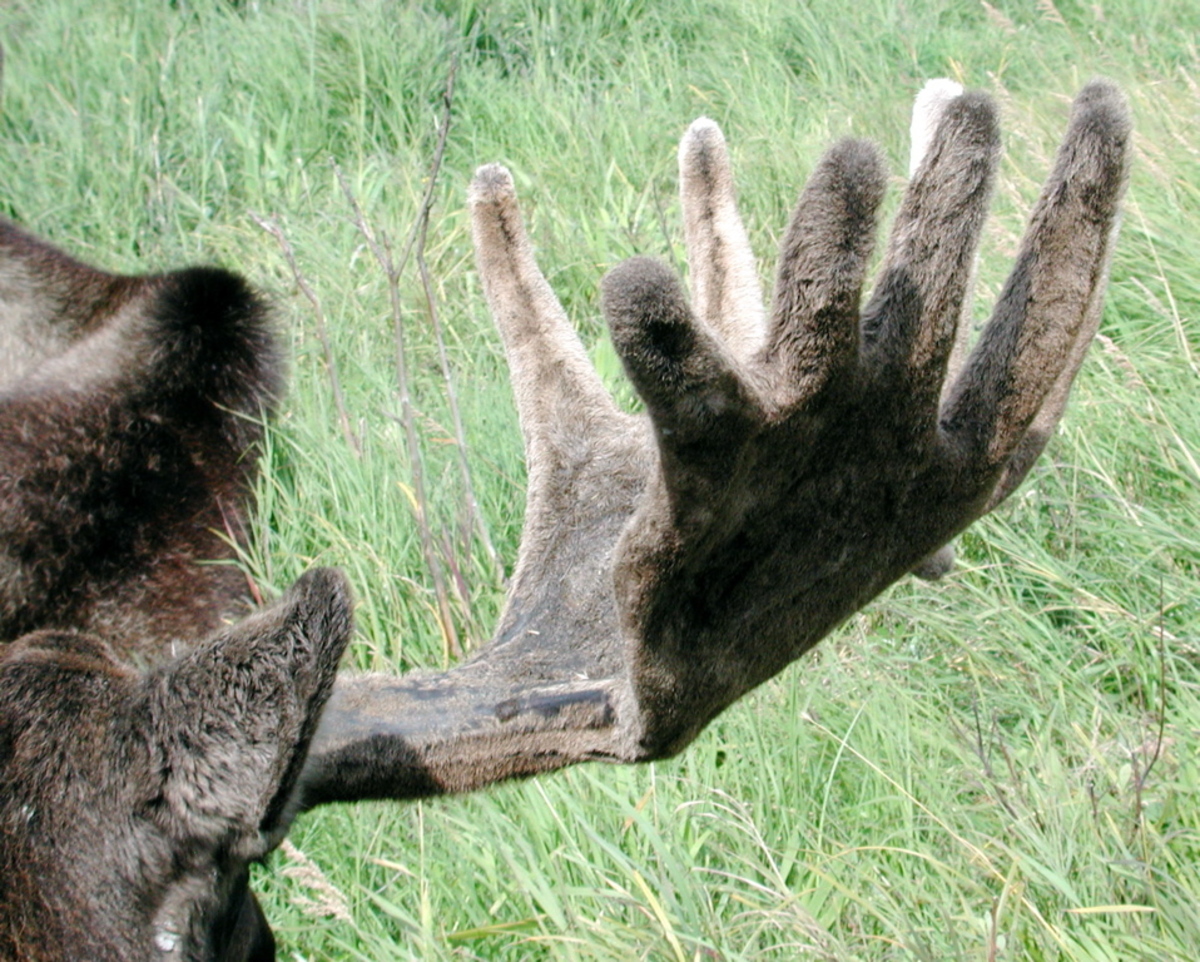
Velvet on moose antlers by Karen Laubenstein, US Fish and Wildlife Service
Later in the season, generally in September, antlers solidify and blood flow is cut off, causing the velvet to dry up and fall off. It can result in an alarming, “gnarly” look, but the process is over quickly, often taking less than a day. It’s possible that the growth process for antlers, and the shedding of velvet, is an itchy one; many humans can relate to both the itch of dead skin and the discomfort of growth during adolescence.

A male white-tailed deer in Howard County, taken by Jeff Culler (9/14/2016). Via Maryland Biodiversity Project. This deer has recently shed its velvet.
Suggested Buck Moon Activities:
Make your own antlers with aluminum foil, wire, and an outer layer of fabric or clay. While shed antlers are legal to collect (see Maryand’s shed policy here), we encourage Marylanders to leave shed deer antlers in the environment to provide much needed mineral sources for other wildlife.
Sign up for a mentored hunt or a Becoming an Outdoors Woman (BOW) workshop; hunting remains a key control measure for the deer population in Maryland. In the absence of gray wolves who historically kept the population at stable levels, humans have taken their place as deer’s primary predators. If hunting isn’t your thing, BOW workshops also include many other outdoor activities and opportunities to learn new skills.
Regardless of interest in hunting, give some thought to archery via the Maryland National Archery in Schools Program. Archery is a skill that helps hone patience, physical stamina, and concentration, and as school approaches again, finding a youth sport that is unique and rewarding without the stress of team expectations can be a relief for many young people.
Read more about antler development and its intriguing cycle on the DNR website, and about Maryland’s deer here!
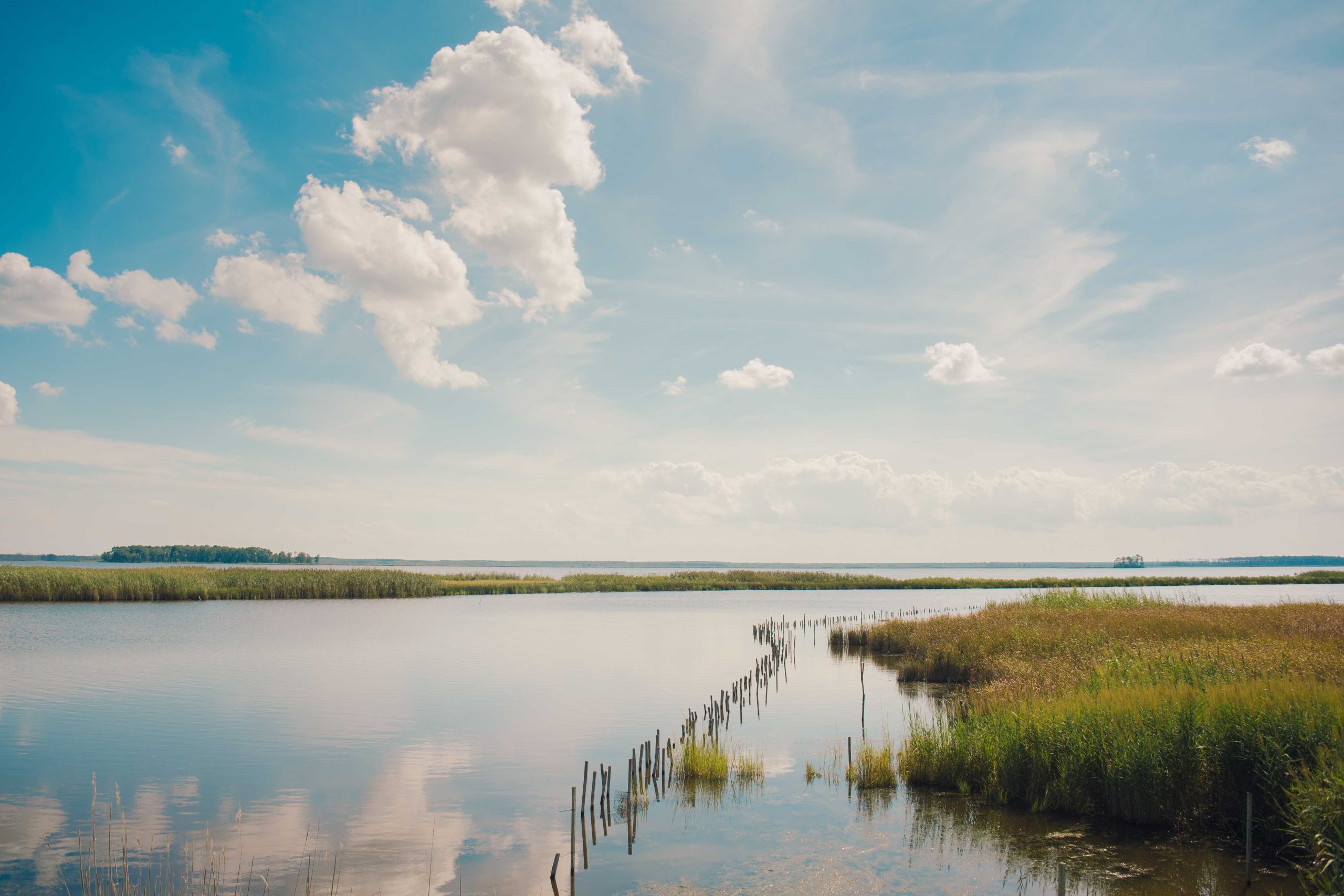
Blue Skies by Yazan Hasan, submitted to the 2020 Maryland DNR Photo Contest.
August__________________________________________________________
Sturgeon Moon
August is often called the Sturgeon Moon, allegedly because it was a time of year known among Great Lakes peoples as a time of abundant fishing of lake sturgeon (Acipenser fulvescens). For European colonists living along the Atlantic Coast, Atlantic sturgeon (Acipenser oxyrinchus) and shortnose sturgeon (Acipenser brevirostrum) were important food sources, with remains of countless sturgeon being found in the Fort in Historic Jamestowne.
Sturgeon look like dinosaurs, so it’s no surprise that they trace their origins back to the Late Triassic period, although the earliest fossil of a sturgeon may be from the Jurassic period. The fish are scale-less, instead sporting hard “scutes” that act like a kind of armor to protect the slow-moving and slow-developing fish. Like many other animals with slow metabolisms, they prefer colder temperatures, can grow to large sizes, and can live 70-100 years, a long time for a fish.

Skeletonized Atlantic Sturgeon on beach at Parker River National Wildlife Refuge. U. S. Fish and Wildlife Service – Northeast Region. The bony plates called scutes are fully on display.
Most sturgeon species have the ability to reach incredible sizes; the record is held by a beluga sturgeon (Huso huso) caught in 1827, which reportedly was 23 feet long and weighed more than 3,000 pounds. The Atlantic sturgeon ranges a modest 6-8 feet at maturity, although individuals have nearly doubled that size, the largest coming in at 14 feet and 800 pounds.
These fish reach sexual maturity a decade into life, and in some places not until their 20s, and don’t breed every year. Subsequently, it becomes hard for them to replenish their numbers when populations decline. A combination of overharvesting, pollution, and restriction of habitat has created a massive population loss in the giant prehistoric beasts. Today, Atlantic sturgeon and the smaller shortnose sturgeon are both Federally and State Endangered. You can read about the Department of Natural Resources efforts for conservation here.
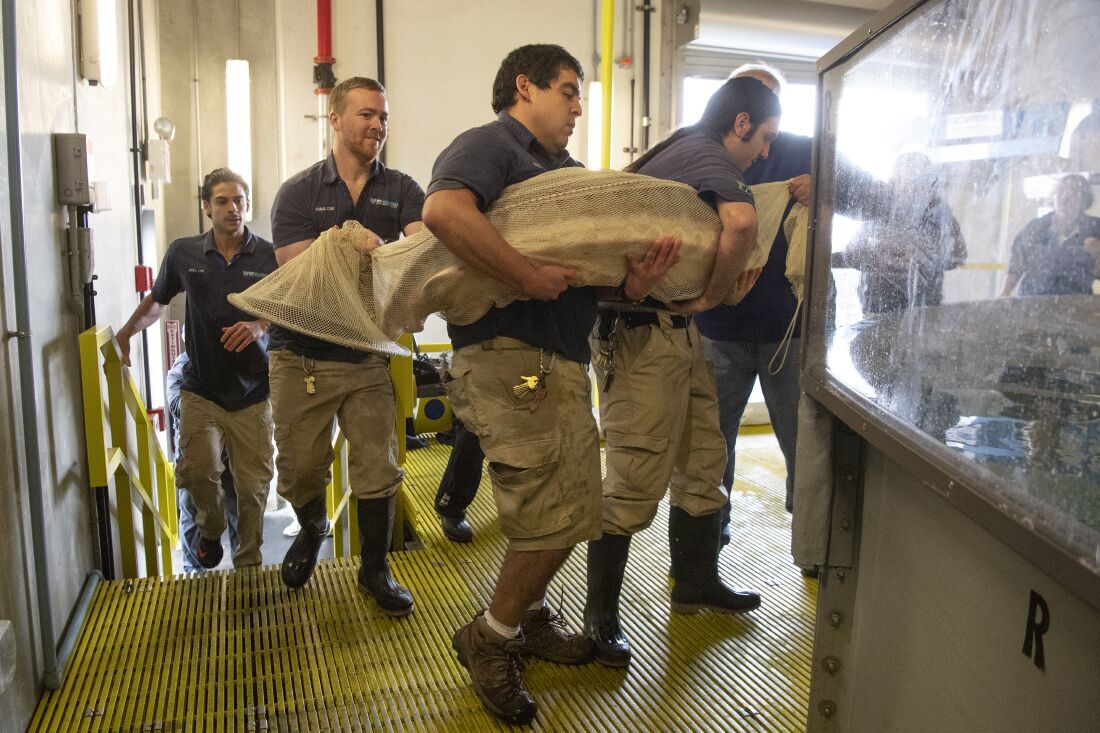
DNR and New York Aquarium staff help transfer sturgeon in 2018. Photo by Julie Larsen Maher, Maryland Department of Natural Resources.
Suggested Sturgeon Moon Activities:
One of the hotter parts of the summer is always a great opportunity to visit the National Aquarium to see the pallid sturgeon in their care and learn about conservation efforts that have been undertaken to restore habitat in the Chesapeake.
Join a river cleanup to get outside and get involved in habitat restoration! Check with your local state park to see what volunteer opportunities are available.
If you’d like to make a difference for the habitat of Atlantic sturgeons and all the other beautiful and unique animalian Marylanders that call our waterways home, you can get your yard certified as wildlife habitat with the National Wildlife Federation through the National Aquarium, or a Bay-Wise certification through UMD Extension.
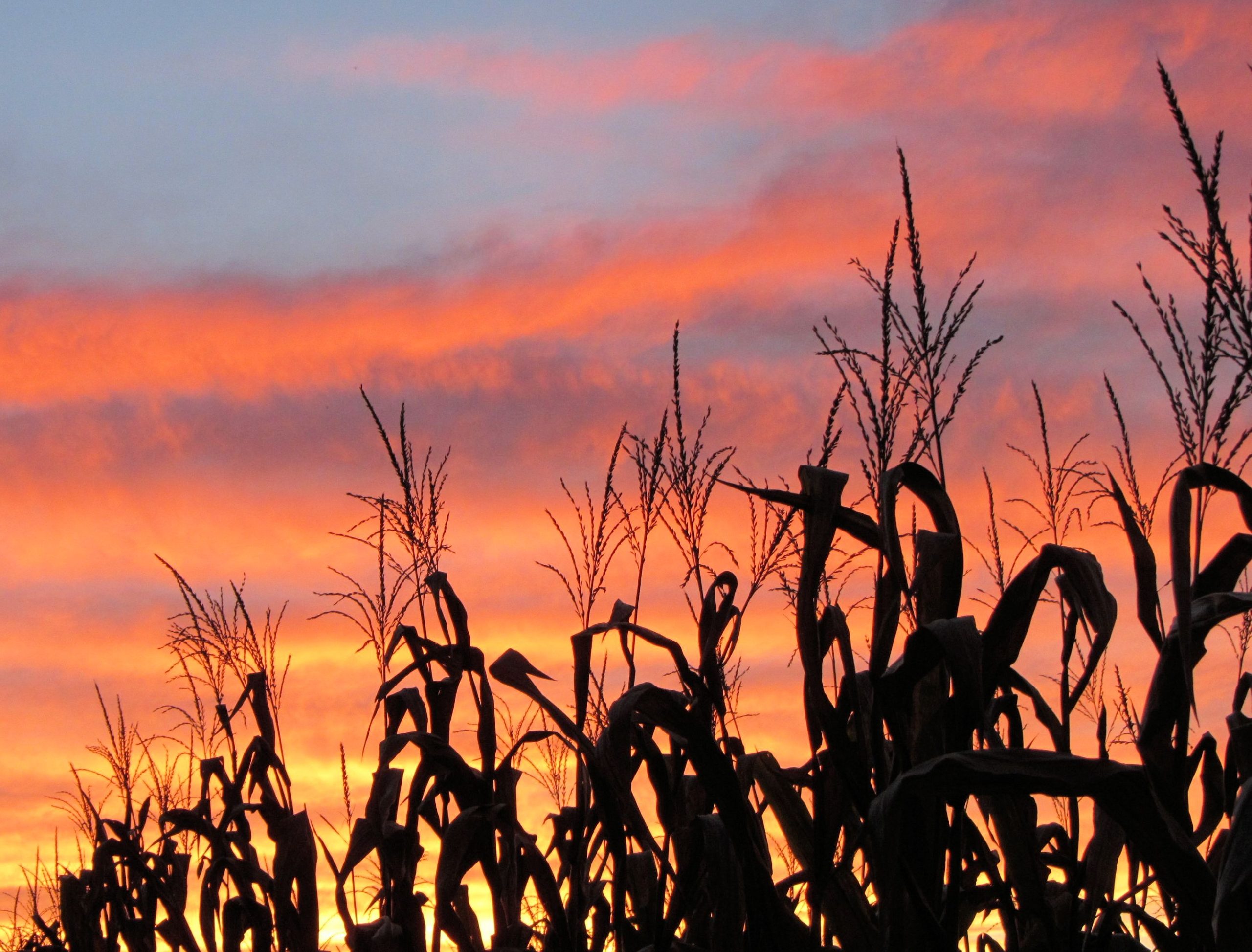
Cornfield Sunset by Monica Hawse, submitted to the 2015 Maryland DNR Photo Contest.
September_______________________________________________________
Harvest Moon, Barley Moon, Corn Moon
September’s full moon has many names, both contemporary and older, and often they center around the harvest of crops. The name Corn Moon was recorded in 1722 as used by native peoples of Virginia, although it is unclear whether this is meant to be August or September.
In contemporary times, the full moon closest to the autumnal equinox is known as the Harvest Moon, which can occur in September or October.
Much has been written about the history of corn in the Americas, so perhaps a better focus for us is the underappreciated corn snake (Pantherophis guttatus).

A Red Cornsnake in Howard County (7/26/2015), by Bonnie Ott, via Maryland Biodiversity Project. Any snake with a round pupil in Maryland is harmless.
Corn snakes are so named both for their habit of frequenting corn fields (to eat the mice) and for a distinctive mottled pattern they often sport on their bellies that resembles the calico or checkered appearance of traditional flint corn. Due to their breeding for a wide range of color variations (called morphs), they are popular in the pet trade. These harmless snakes are often mistaken for copperheads, due to their vivid colors. Unfortunately both the non-venomous corn snake and the shy copperhead are victims of misplaced alarm – either way, it is illegal to kill any snake in Maryland.
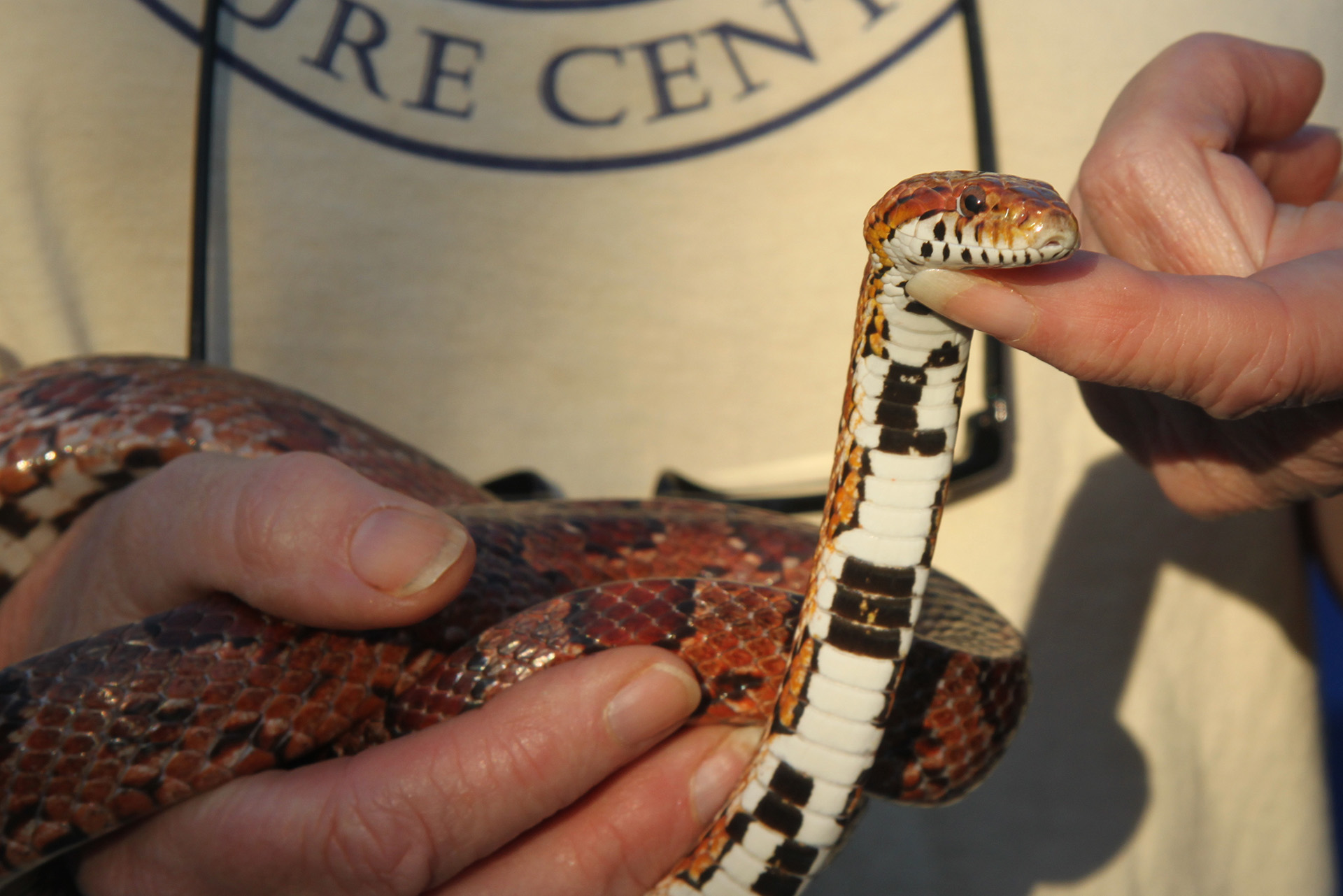
Corn snake showing the mottled or irregular checkerboard pattern on their belly at Chattahoochee Nature Center by muffinn from Worcester, UK, CC BY 2.0, via Wikimedia Commons.
Like many snakes, corn snakes are generalists; they can eat a wide variety of foods depending on what’s available, as long as it’s meat. This can mean anything from small rodents to smaller snakes, frogs, bats, and insects. While they are not as good at climbing as their central ratsnake relatives (Pantherophis alleghaniensis), they have been known to climb trees to eat out of nests. Interestingly, a 2015 study showed that of four species observed eating via nest predation (eating eggs or nestlings directly from the nest), corn snakes were the only species to eat this way exclusively at night. This is possibly a conflict avoidance technique, as another behavior noted by the researchers was that the corn snakes would avoid striking at the sleeping adult birds, favoring to simply push them off the nest or wiggle underneath them.
Corn snakes in the wild are a non-aggressive species, making them a welcome partner for corn fields, or during any harvest season. In September, many snakes are preparing for brumation (the reptile version of hibernation), and taking advantage of whatever sunny days are left to bask!
Suggested Corn Moon Activities:
Learn the patterns of Maryland snakes! Or at least the venomous ones; this can help you and others from mistaking a harmless corn snake for a snake you should avoid. Teach at least one other person the patterns of these snakes, and remember that the patterns are more important than the colors for identification.
For an additional resource, the Wildlife and Heritage Service finished an intensive update of our reptiles and amphibians of Maryland poster series! The series is free to download, or available as print copies in the DNR store!